

Daniel Pink’s research has influenced over 10 million readers across six bestselling books, fundamentally changing how Fortune 500 companies motivate employees, structure workdays, and approach sales. Yet most people who’ve heard his name have never actually implemented his science-backed strategies.
I’m going to show you everything about Daniel Pink: his fascinating journey from speechwriter to thought leader, the revolutionary ideas in each of his books, and most importantly, the specific tactics you can apply today to work smarter, sell better, and live more effectively. Whether you’re leading a team, running a business, or just trying to be more productive, Pink’s research offers proven frameworks that actually work.
Who Is Daniel Pink?
Before diving into Daniel Pink‘s ideas, let’s understand the man behind the research.
The Early Career of Daniel Pink
Daniel didn’t start as a bestselling author. He began his career in politics and policy, working as chief speechwriter for Vice President Al Gore from 1995 to 1997.
The Washington Years: During his time in the White House, Daniel wrote speeches on economic and technology policy. This experience gave him insider access to how large organizations think about work, productivity, and motivation.
The Pivot: After leaving the White House, Daniel transitioned to writing about business and behavior. He started contributing to major publications like The New York Times, Harvard Business Review, and Fast Company. This shift from speechwriting to thought leadership set the stage for his groundbreaking books.
What Makes Daniel Pink Different
Daniel isn’t a traditional academic researcher, nor is he a pure business consultant. He’s a translator—someone who takes complex scientific research and makes it accessible and actionable for regular people.
The Daniel Pink Approach:
- Synthesizes research from multiple disciplines
- Presents findings in engaging, story-driven formats
- Provides practical applications, not just theory
- Challenges conventional wisdom with evidence
- Writes for general audiences, not just academics
This unique position allows Pink to bridge the gap between ivory tower research and real-world application.
Daniel Pink Books: The Complete Collection
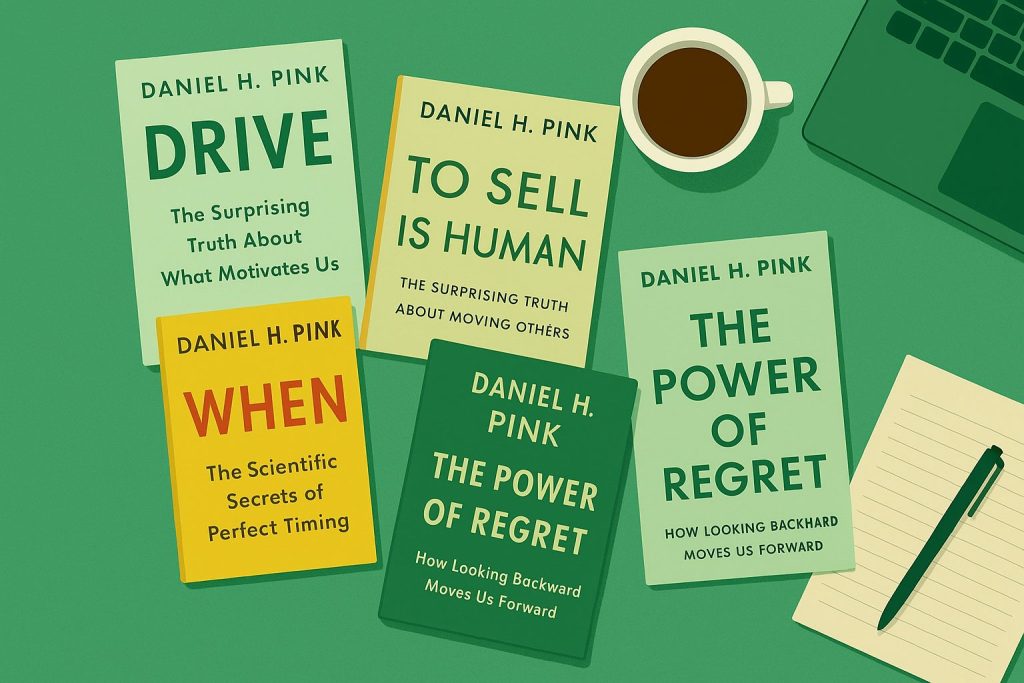
Let’s explore each Daniel Pink book and the revolutionary ideas within them.
“Drive: The Surprising Truth About What Motivates Us” by Daniel Pink
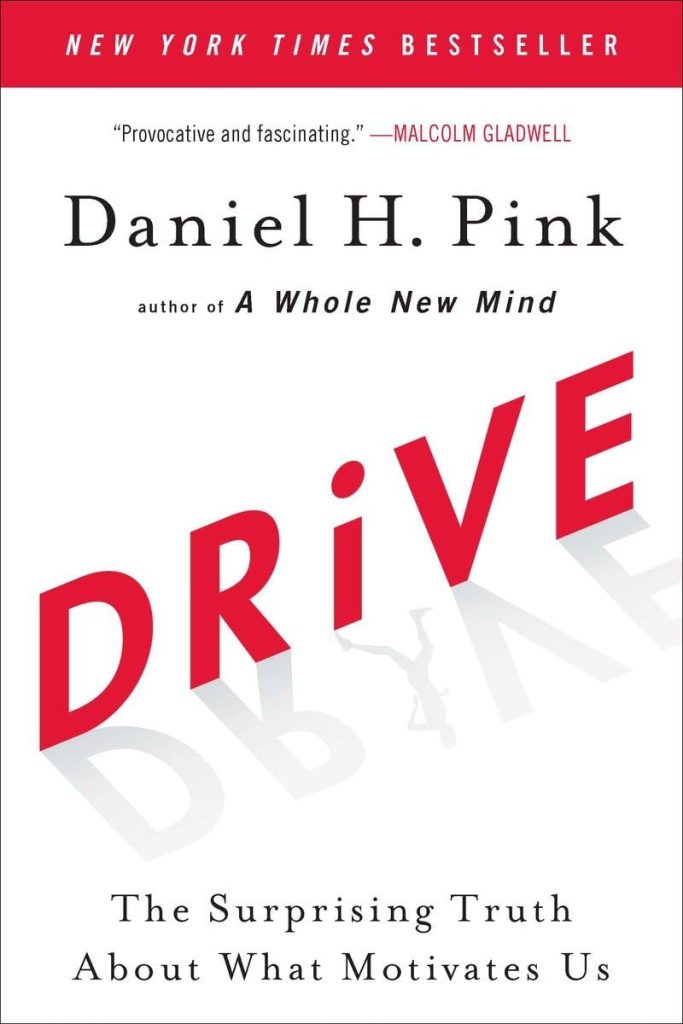
Published: 2009 Impact: New York Times bestseller, translated into 35+ languages
This book completely upended traditional thinking about motivation in the workplace.
The Core Argument
Daniel argues that the traditional carrot-and-stick approach to motivation—rewards for good performance, punishments for bad—doesn’t work for modern knowledge work. In fact, it often makes performance worse.
Motivation 2.0 vs. Motivation 3.0
Motivation 2.0 (Traditional):
- External rewards drive behavior
- More money = more motivation
- Control and compliance are key
- Creativity is separate from work
Motivation 3.0 (Daniel Pink’s Framework):
- Intrinsic motivation drives performance
- Autonomy, mastery, and purpose matter most
- Self-direction beats compliance
- Creativity emerges from proper conditions
The Three Elements of True Motivation
Autonomy: The desire to direct our own lives. Daniel shows that people perform better when they have control over four aspects of work:
- What they work on (task)
- When they work (time)
- How they work (technique)
- Who they work with (team)
Mastery: The urge to get better at something that matters. Daniel explains that mastery requires:
- A mindset that views abilities as improvable
- Engaging in deliberate practice
- Accepting that mastery is asymptotic (you approach but never fully reach it)
Purpose: The yearning to do what we do in service of something larger than ourselves. Daniel demonstrates that purpose-driven organizations:
- Outperform competitors
- Retain employees longer
- Attract better talent
- Create more innovation
Practical Applications from Daniel Pink’s Drive
For Leaders:
- Give employees more autonomy over projects
- Create time for mastery-building activities
- Connect daily work to larger purpose
- Replace if-then rewards with now-that rewards
For Individuals:
- Seek roles with greater autonomy
- Set aside time for deliberate practice
- Find or create purpose in your work
- Use intrinsic goals over extrinsic ones
“To Sell Is Human: The Surprising Truth About Moving Others” by Daniel Pink
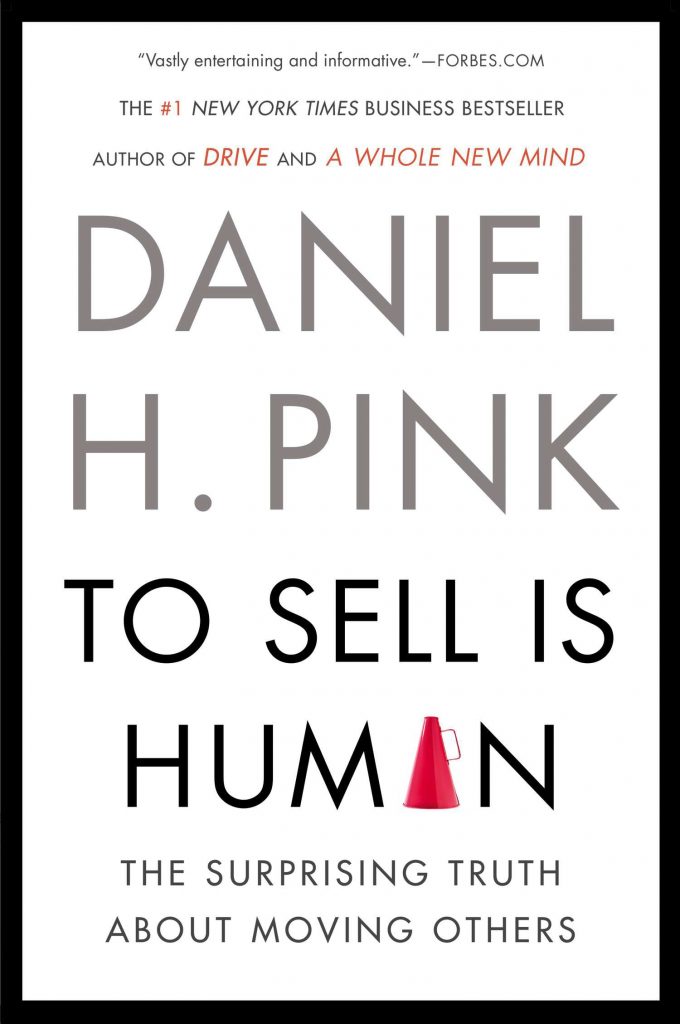
Published: 2012 Focus: The new science of sales and persuasion
In this Daniel Pink book, he reveals that we’re all in sales now—whether we realize it or not.
The Core Insight
Daniel presents research showing that 1 in 9 Americans work in traditional sales. But everyone else? They spend about 40% of their time in “non-sales selling”—persuading, influencing, and convincing others.
The ABCs of Selling (Daniel Pink’s Version)
Traditional sales taught ABC: Always Be Closing.
Daniel Pink offers new ABCs:
- Attunement: Understanding another person’s perspective
- Buoyancy: Staying afloat in an ocean of rejection
- Clarity: Making sense of murky situations
The Six Successors to the Elevator Pitch
Daniel Pink provides modern alternatives to the traditional 30-second pitch:
The One-Word Pitch: Distill your message to a single word (think: “Search” for Google)
The Question Pitch: Use questions instead of statements to engage thinking
The Rhyming Pitch: Rhymes increase processing fluency and perceived accuracy
The Subject-Line Pitch: Craft subject lines that are useful, curiosity-inducing, or specific
The Twitter Pitch: Convey your message in 280 characters or less
The Pixar Pitch: Use the story structure: Once upon a time… Every day… One day… Because of that… Until finally…
Practical Applications from Daniel Pink’s Sales Research
For Everyone:
- Prepare for conversations by considering others’ perspectives
- Use interrogative self-talk before challenging situations
- Lead with questions rather than statements
- Frame problems in ways that reveal hidden possibilities
“When: The Scientific Secrets of Perfect Timing” by Daniel H. Pink
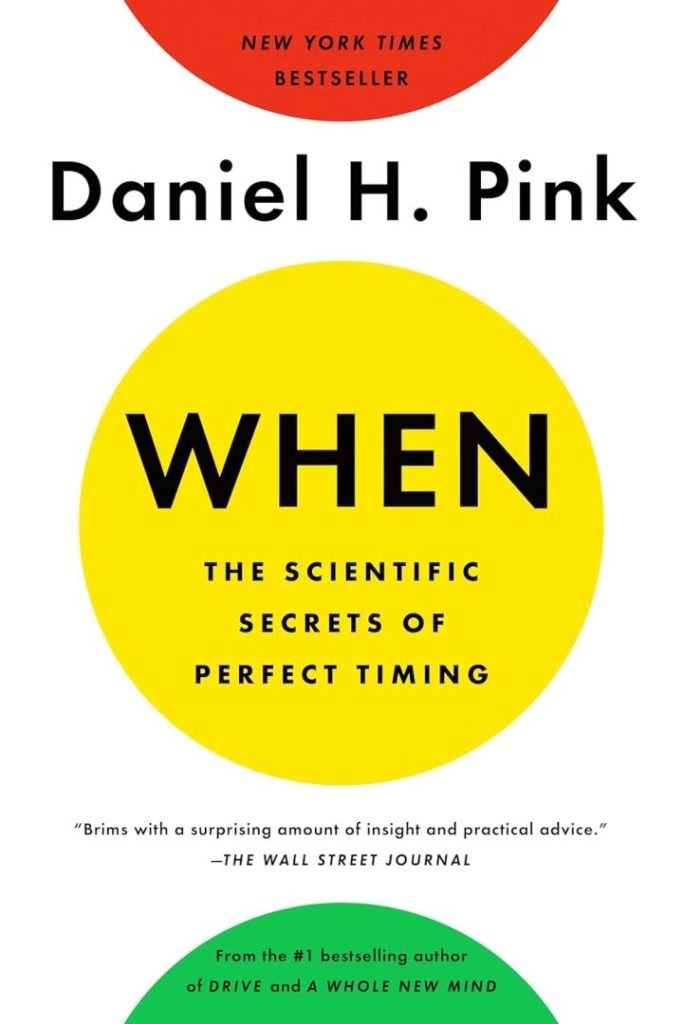
Published: 2018 Revolutionary Idea: Timing isn’t everything, but it’s a big thing
This Daniel Pink book synthesizes research on chronobiology, psychology, and economics to reveal the hidden patterns of daily life.
The Day Has Three Stages
Daniel Pink presents research showing most people experience:
Peak (Morning):
- Highest alertness
- Best for analytical work
- Ideal for important decisions
- Maximum vigilance
Trough (Early Afternoon):
- Lowest point in daily rhythm
- Increased errors
- Decreased vigilance
- Poor decision-making time
Recovery (Late Afternoon/Evening):
- Renewed energy
- Better for creative work
- Enhanced insight
- Social activities
The Power of Breaks
Daniel Pink presents surprising research on breaks:
- Short breaks increase productivity
- Social breaks are more restorative than solo breaks
- Outside breaks beat inside breaks
- Moving breaks trump stationary breaks
The Perfect Break According to Daniel Pink: Something beats nothing. Moving beats stationary. Social beats solo. Outside beats inside. Fully detached beats semi-detached.
Beginnings, Midpoints, and Endings
Daniel Pink shows that:
Beginnings:
- Fresh starts motivate behavior change
- Temporal landmarks create motivation
- First impressions matter enormously
Midpoints:
- Can spark renewed effort or slump
- The “uh-oh effect” galvanizes action
- Works best when you’re slightly behind
Endings:
- We remember endings disproportionately
- Final impressions shape overall memories
- Deadlines energize action
Practical Applications from Daniel Pink’s Timing Research
Schedule Your Day:
- Tackle analytical work during your peak
- Avoid important decisions during your trough
- Save creative work for recovery periods
- Schedule breaks every 90 minutes
Leverage Temporal Landmarks:
- Start new habits on meaningful dates
- Use midpoints to assess and adjust
- Create memorable endings to experiences
Other Daniel Pink Books
“A Whole New Mind: Why Right-Brainers Will Rule the Future“
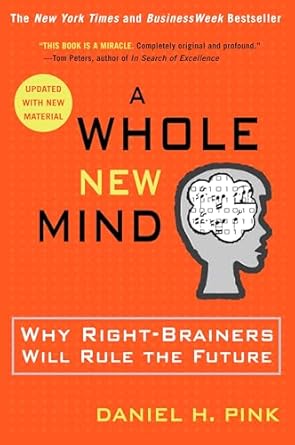
Published: 2005
Daniel Pink argues that the future belongs to people who can combine left-brain logic with right-brain creativity. The six essential aptitudes: Design, Story, Symphony, Empathy, Play, and Meaning.
“The Adventures of Johnny Bunko: The Last Career Guide You’ll Ever Need“

Published: 2008
The first Daniel Pink book published as a manga comic book, presenting career advice through an engaging visual narrative.
“Free Agent Nation: The Future of Working for Yourself“

Published: 2001
Daniel Pink’s first major book predicted the rise of freelancing and independent work—prescient given today’s gig economy.
The Daniel Pink Philosophy on Work

Understanding Daniel Pink’s underlying philosophy helps you apply his ideas more effectively.
Intrinsic Over Extrinsic
Throughout his work, Daniel Pink emphasizes intrinsic motivation over external rewards.
The Research: Studies show that extrinsic rewards (money, grades, prizes) can actually decrease performance on tasks requiring creativity or complex problem-solving.
The Application: Design work environments and personal goals around autonomy, mastery, and purpose rather than purely financial incentives.
Science Over Convention
Daniel Pink consistently challenges conventional wisdom with scientific evidence.
Examples:
- Carrot-and-stick motivation doesn’t work (Drive)
- Everyone is in sales (To Sell Is Human)
- Timing dramatically affects performance (When)
Practical Over Theoretical
Every Daniel Pink book ends with actionable strategies, not just interesting ideas.
The Pattern: Research → Insight → Application. He never leaves you wondering “so what?”
How to Apply Daniel Pink’s Research in Your Life
Let’s get tactical about implementing Daniel Pink’s ideas.
Redesigning Your Work for Motivation
Based on Daniel Pink’s Drive framework:
Increase Autonomy
Task Autonomy:
- Negotiate project selection with your manager
- Volunteer for stretch assignments aligned with interests
- Create side projects within your role
Time Autonomy:
- Propose flexible scheduling arrangements
- Block uninterrupted time for deep work
- Set boundaries around meeting times
Technique Autonomy:
- Experiment with different work methods
- Document what works and share with team
- Ask for freedom to innovate processes
Team Autonomy:
- Seek opportunities to choose collaborators
- Build cross-functional relationships
- Create informal working groups
Build Toward Mastery
Set Learning Goals: Daniel Pink emphasizes learning goals over performance goals. Instead of “close 10 deals,” try “master consultative selling techniques.”
Practice Deliberately:
- Identify specific skills to improve
- Get feedback from experts
- Push beyond comfort zone systematically
- Reflect on practice sessions
Embrace the Plateau: Mastery isn’t linear. Daniel Pink teaches that plateaus are part of the process, not evidence of failure.
Connect to Purpose
Find Your Why:
- Identify who benefits from your work
- Connect daily tasks to impact on others
- Seek roles with clear social value
- Create purpose where none is obvious
Purpose at Scale: Even mundane work can connect to purpose. Daniel Pink suggests asking: “How does this help someone?”
Improving Your Persuasion Skills
Based on Daniel Pink’s To Sell Is Human:
Practice Attunement
Perspective Taking: Before any persuasive conversation, spend 5 minutes considering:
- What does this person care about?
- What pressures are they facing?
- What would success look like for them?
- How might they interpret my message?
Reduce Power: Research cited by Daniel Pink shows that feeling powerful reduces our ability to take others’ perspectives. Intentionally make yourself feel less powerful before important conversations.
Build Buoyancy
Before: Use interrogative self-talk. Instead of “I can do this!” ask “Can I do this?” and list reasons why you can.
During: Daniel Pink’s research shows positivity ratios matter. Aim for 3 positive emotions for every 1 negative during challenges.
After: Treat rejection as external, specific, and temporary rather than internal, global, and permanent.
Provide Clarity
Curate Information: Don’t just provide more information. Daniel Pink teaches that clarity means helping people make sense of information.
Frame Problems: The way you frame a situation determines whether people see problems or possibilities.
Optimizing Your Timing
Based on Daniel Pink’s When:
Map Your Chronotype
Determine Your Type: About 15% of people are larks (morning people), 20% are owls (evening people), and 65% are third birds (in between).
Daniel Pink provides tools to identify your type and adjust recommendations accordingly.
Schedule by Task Type
Peak Tasks (Morning for most):
- Analysis and critical thinking
- Important decisions
- Writing and editing
- Detailed work requiring vigilance
Trough Tasks (Early afternoon):
- Administrative work
- Routine tasks
- Emails and communications
Recovery Tasks (Late afternoon):
- Brainstorming
- Creative problem-solving
- Strategic thinking
- Collaborative work
Strategic Break-Taking
The Daniel Pink Break Formula:
Micro-breaks (5 minutes every hour):
- Stand and stretch
- Look away from screen
- Brief conversation
Mid-breaks (15-20 minutes mid-morning and mid-afternoon):
- Walk outside if possible
- Social interaction
- Complete mental detachment
Naps (10-20 minutes for recovery): Research presented by Daniel H. Pink shows the “nappuccino” works: drink coffee, nap for 20 minutes, wake refreshed as caffeine kicks in.
Common Misconceptions About Daniel Pink’s Work
Let’s address misunderstandings about Daniel Pink’s research.
Misconception 1: “Money Doesn’t Matter”
The Mistake: Some interpret Daniel H. Pink’s Drive as saying compensation doesn’t matter.
The Reality: Daniel Pink explicitly states that money matters—you need to pay people enough to take money off the table. Once basic needs are met and pay is fair, additional money has diminishing motivational returns.
The Nuance: For simple, algorithmic tasks, financial incentives can work. For complex, creative work, they often backfire.
Misconception 2: “Everyone Should Work Mornings”
The Mistake: Assuming Daniel Pink’s timing research means everyone should do important work in the morning.
The Reality: Daniel H. Pink emphasizes that chronotypes vary. About 20% of people are owls whose peak comes in evening hours.
The Application: Know your own pattern and schedule accordingly, rather than following a one-size-fits-all approach.
Misconception 3: “Sales Techniques Are Manipulative”
The Mistake: Viewing Daniel Pink’s sales advice as manipulation tactics.
The Reality: Daniel Pink specifically advocates for service-oriented selling based on genuine attunement to others’ needs. His research shows that pushy, manipulative techniques fail in transparent modern markets.
Misconception 4: “Purpose Means Charity Work”
The Mistake: Thinking you need to work for a nonprofit to have purpose.
The Reality: Daniel shows that purpose can be found or created in any role by connecting work to how it helps others, even in small ways.
The Pink Impact on Organizations
How has Daniel influenced how companies operate?
Changes in Performance Management
Many companies have restructured performance systems based on Daniel Pink’s Drive:
Before Drive:
- Heavy emphasis on financial bonuses
- Strict output quotas
- Micromanagement and oversight
- Annual performance reviews focused on past performance
After Pink:
- Focus on autonomy and self-direction
- Emphasis on learning and growth
- Trust-based management
- Continuous feedback focused on development
Companies Influenced: Google, Microsoft, Atlassian, and many others have implemented “20% time” or similar autonomy programs inspired by Daniel Pink’s research.
Redesigning Work Schedules
Daniel Pink’s When has influenced scheduling at progressive companies:
Timing Optimizations:
- Important meetings scheduled during peak hours
- Creative sessions during recovery periods
- Mandatory break policies
- Flexible scheduling based on chronotypes
Transforming Sales Training
Daniel Pink’s To Sell Is Human changed sales training at major organizations:
New Focus Areas:
- Attunement and perspective-taking
- Asking better questions
- Problem-finding over problem-solving
- Service orientation over aggressive closing
Criticisms of Daniel Pink’s Work
Let’s examine critiques honestly.
Criticism 1: “Oversimplification of Research”
The Concern: Some academics argue Daniel oversimplifies complex research findings.
The Response: Daniel Pink acknowledges he’s a popularizer, not a researcher. His role is making research accessible. He extensively cites sources for readers wanting deeper dives.
The Balance: Accessibility vs. nuance is always a trade-off. Daniel Pink chooses accessibility while providing paths to deeper research.
Criticism 2: “Cultural Bias Toward Western Contexts”
The Concern: Most research Daniel Pink cites comes from Western contexts, potentially limiting applicability.
The Response: This is a fair critique. Daniel Pink could do more to address cross-cultural variations in his findings.
The Reality: Many principles, like the importance of autonomy, do appear to transcend cultures, though expressions vary.
Criticism 3: “Limited Attention to Implementation Challenges”
The Concern: The books are better at identifying problems than solving systemic barriers to solutions.
The Response: Daniel Pink provides individual and organizational tactics but acknowledges that changing systems is complex and requires sustained effort beyond a single book.
Your Daniel Action Plan
Here’s how to implement Daniel Pink’s ideas systematically.
Week 1: Audit Your Current State
Motivation Audit (Based on Drive):
- Rate your autonomy (1-10) across task, time, technique, team
- Identify opportunities for mastery
- Clarify how your work connects to purpose
Timing Audit (Based on When):
- Track your energy levels hourly for 3 days
- Identify your chronotype
- Note when you schedule critical tasks
Persuasion Audit (Based on To Sell Is Human):
- List situations requiring influence
- Rate your attunement skills
- Assess how you handle rejection
Week 2-4: Implement One Pink Strategy
Choose One Focus: Don’t try everything. Pick the area with highest potential impact.
Option 1: Increase Autonomy Negotiate one area of increased autonomy with your manager or in your business.
Option 2: Optimize Timing Reschedule your week based on Daniel Pink’s peak-trough-recovery framework.
Option 3: Improve Persuasion Practice interrogative self-talk before challenging conversations for 21 days.
Month 2-3: Expand and Refine
Add Second Strategy: Once the first becomes habitual, implement another Daniel Pink principle.
Measure Results: Track concrete outcomes:
- Productivity metrics
- Quality of work
- Energy levels
- Persuasion success rates
Ongoing: The Pink Mindset
Regular Reviews: Monthly assessment of autonomy, mastery, and purpose.
Continuous Learning: Pink regularly shares new research. Follow his work for updates and refinements.
Community: Connect with others implementing Daniel Pink’s ideas to share experiences and insights.
Daniel Pink’s Latest Work and Future Directions
What is Daniel Pink focused on now?
Recent Projects
The Pinkcast: Daniel Pink produces a regular video series answering reader questions and exploring research findings.
Newsletter: Regular insights delivered to subscribers covering motivation, productivity, and human behavior.
Speaking: Daniel Pink remains one of the most sought-after speakers on work, motivation, and timing.
Emerging Themes
While Daniel Pink hasn’t announced his next major book, his recent work explores:
- Regret and decision-making
- Remote work dynamics
- Post-pandemic workplace changes
- Artificial intelligence’s impact on motivation
Final Thoughts on Pink
Pink has fundamentally changed how millions of people think about work, motivation, and productivity. His gift is taking dense academic research and making it not just understandable, but actionable.
The power of Daniel Pink’s work isn’t in revolutionary new discoveries—it’s in challenging assumptions we didn’t even know we held. Before Drive, we assumed money motivated. Before To Sell Is Human, we assumed only salespeople sold. Before When, we assumed timing was just scheduling.
Pink showed us that the conventional wisdom on all these topics was wrong—and he provided better alternatives backed by science.
But here’s what matters most: Daniel Pink gives you tools you can use today. Not someday. Not after you get a promotion or start a company. Today.
You can restructure your day around peak, trough, and recovery periods today. You can practice interrogative self-talk before your next difficult conversation today. You can identify one area where you could increase autonomy today.
Most people read Daniel Pink’s books, find them fascinating, and change nothing. Don’t be most people.
Pick one concept from this article. One. Implement it this week. Not next month. This week.
Maybe you’ll schedule analytical work during your peak hours. Maybe you’ll reframe a sales conversation as service. Maybe you’ll find purpose in work you previously considered mundane.
Whatever you choose, do it now. Because understanding Daniel Pink’s research is interesting, but applying it is transformative.
The science is clear. The strategies are proven. The only question is whether you’ll actually use them.
What will you implement first?
Image Suggestions for This Article
Image 1 – For H2 “Daniel Pink Books: The Complete Collection” A flat-lay photo showing all of Daniel Pink’s books arranged artistically, with “Drive,” “When,” and “To Sell Is Human” prominently featured. The books should be positioned on a clean desk with maybe a coffee cup and notepad visible, giving a “ready to learn” vibe.
Image 2 – For H3 “The Three Elements of True Motivation” An infographic-style image showing three interconnected circles or pillars labeled “Autonomy,” “Mastery,” and “Purpose.” Each element should have simple icons—perhaps a steering wheel for autonomy, a mountain peak for mastery, and a heart or compass for purpose. Clean, modern design with Daniel Pink’s color scheme (blues and oranges).
Image 3 – For H3 “The Day Has Three Stages” A graph or timeline visualization showing the typical day divided into Peak (morning), Trough (early afternoon), and Recovery (late afternoon/evening). Use a wave or curve to show energy levels throughout the day, with different colors for each phase. Include small icons showing recommended activities for each phase (brain for analytical work, etc.).
Image 4 – For H2 “How to Apply Daniel Pink’s Research in Your Life” A split-screen or before/after style image showing a chaotic, disorganized workspace on one side and a well-organized, purposeful workspace on the other. The “after” side should show elements like a visible schedule, motivational purpose statement on the wall, and signs of structured breaks (yoga mat in corner, walking shoes, etc.).
Image 5 – For H3 “Your Daniel Pink Action Plan” A clean checklist or roadmap visual showing the implementation timeline: Week 1 (Audit), Weeks 2-4 (Implement), Months 2-3 (Expand), and Ongoing. Could be designed as a journey map or pathway with checkpoints, using engaging colors and simple icons for each phase. Should feel actionable and achievable, not overwhelming.