

Americans generate over 4.5 pounds of trash per day, yet throw away items worth an estimated $3,000 annually. That old exercise bike gathering dust? Someone’s dream purchase. Those books you’ll never read again? A treasure trove for the right buyer.
Your yard sales isn’t just about decluttering. It’s your ticket to transforming forgotten possessions into cold, hard cash while giving your belongings a second life.
Why Yard Sales Still Matter in the Digital Age
Online marketplaces dominate today’s resale world, but yard sales offer something apps can’t match: immediate gratification. No shipping hassles. No waiting for payments to clear. No dealing with flaky buyers who ghost you after asking fifty questions.
The tactile experience matters too. Shoppers can touch fabrics, test electronics, and examine items up close before buying. This builds trust and often leads to impulse purchases that boost your bottom line.
Plus, there’s the community aspect. Yard sales bring neighbors together, create conversations, and sometimes forge lasting friendships over shared interests in vintage collectibles or gardening tools.

Planning Your Yard Sales: The Foundation of Success
Timing is everything. The best yard sale weekends are typically the first weekend of the month when people have fresh paychecks, and Saturday mornings from 7 AM to noon see the heaviest traffic.
Avoid holiday weekends when people travel, and check your local newspaper for competing sales in your immediate area. Too many sales on one street can dilute foot traffic, though sometimes joining forces with neighbors creates a mini shopping district that attracts more buyers.
Weather can make or break your sale. Have a backup indoor plan for light rain, but postpone for severe weather. Spring and early fall typically offer the most pleasant conditions and motivated buyers.
Gathering Your Inventory
Start collecting items at least two weeks before your sale date. Walk through every room with fresh eyes, asking yourself: “Have I used this in the past year?” If the answer is no, it’s yard sales material.
Don’t overlook these commonly forgotten goldmines:
- Kitchen gadgets you never touch
- DVDs and CDs collecting dust
- Outgrown children’s items
- Exercise equipment doubling as expensive coat racks
- Books you’ve already read
- Holiday decorations you’ve replaced
- Tools you’ve upgraded
- Linens and towels in good condition
Check basements, attics, and garages too. Hidden treasures often lurk in forgotten corners.
The Art and Science of Pricing
Pricing intimidates many first-time sellers, but it’s simpler than you think. Your goal isn’t to recoup what you paid originally – it’s to move merchandise while earning reasonable profit.
The golden rule: price items at 10-20% of retail value for common goods, and research unique or potentially valuable pieces separately. A $50 blender should be priced around $5-10, depending on condition and brand recognition.
Category-Specific Pricing Guidelines
Clothing: Price adult clothes at $1-5, children’s clothes at $0.50-2, and designer or brand-name pieces slightly higher. Group similar items and offer bundle deals like “Fill a bag for $10.”
Books: Paperbacks typically sell for $0.25-1, hardcovers for $1-3, and specialty books (cookbooks, how-to guides, coffee table books) for $2-5. Rare or collectible books warrant online research first.
Electronics: Test everything beforehand and include power cords. Price working electronics at 15-25% of current retail, not what you originally paid. That five-year-old tablet might have cost $300 new, but if similar models sell for $100 today, price yours at $15-25.
Household Items: Kitchen items, decor, and small appliances should move quickly at $1-10. Focus on volume over individual item profit.
Furniture: This requires more strategy. Research similar pieces on Facebook Marketplace or Craigslist first. Small furniture pieces (chairs, side tables, lamps) work well at yard sales, but large items might need different selling channels.
Tools: Men often browse tools first, and quality brands hold value better. Price hand tools at 20-30% of retail, power tools at 15-25%, but ensure they work properly first.
Display Strategies That Drive Sales
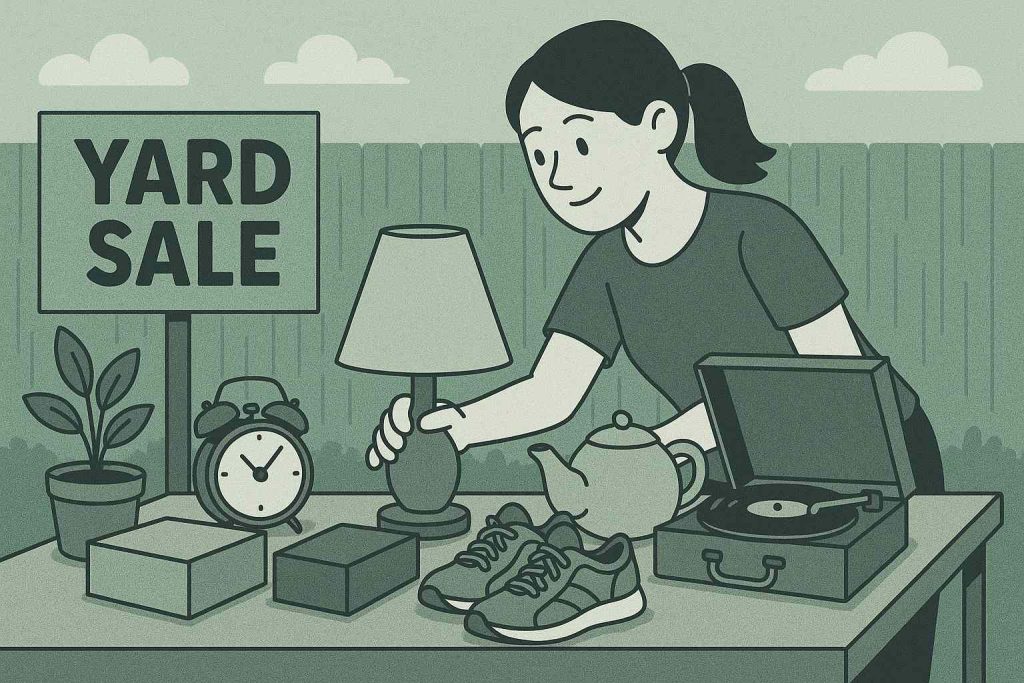
Presentation dramatically impacts sales volume. Shoppers make split-second decisions, and attractive displays encourage browsing and buying.
Set up tables at comfortable browsing height – card tables work perfectly. Avoid placing items directly on the ground except for large pieces like furniture or exercise equipment.
Group similar items together. Create a “book corner,” a “kitchen station,” and a “clothing area.” This helps shoppers find what interests them quickly and encourages focused browsing within categories.
Hang clothes on a makeshift rack using rope between two trees or a portable clothing rack if you have one. Folded clothes in boxes get picked through messily and look less appealing.
The Psychology of Yard Sales Shopping
Most yard sales shoppers are bargain hunters seeking deals, not necessarily specific items. They browse impulsively, so eye-catching displays matter more than perfect organization.
Place your best, most attractive items at eye level on front tables where arriving shoppers see them first. These “hook” items draw people in, and once they’re browsing, they often find other things to buy.
Use the “anchor effect” by placing a few higher-priced quality items prominently. When shoppers see a nice piece of furniture marked at $40, everything else looks like a steal by comparison.
Create curiosity with partially visible items. A corner of an interesting picture frame peeking out from behind other items makes people want to investigate further.
Marketing Your Sale for Maximum Traffic
The most beautiful display means nothing without shoppers, so marketing deserves serious attention.
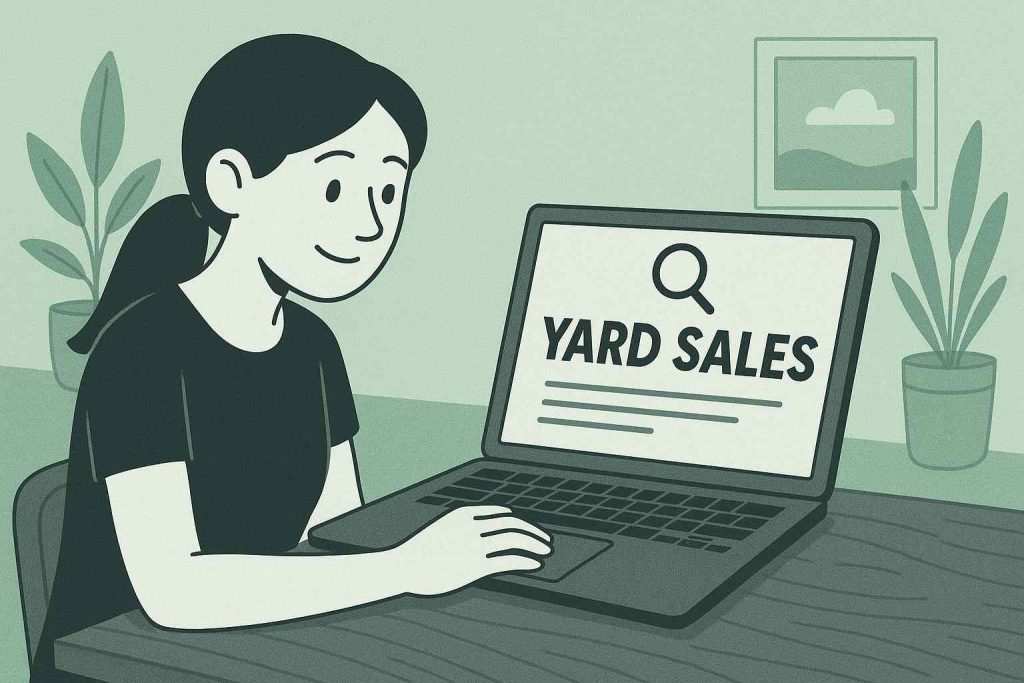
Craigslist remains the dominant platform for yard sales advertising. Post your ad in the “Garage & Moving Sales” section 3-5 days before your sale with clear details: date, time, address, and compelling item highlights.
Write attention-grabbing headlines like “Moving Sale – Everything Must Go!” or “Multi-Family Sale – Furniture, Electronics, Clothes & More!” rather than bland “Yard Sales” titles.
Include specific desirable items in your description: “Vintage furniture, working electronics, designer clothes, kitchen appliances, books, and household items.” This helps people searching for specific categories find your sale.
Facebook Marketplace has gained popularity for yard sales promotion. Post in local community groups and neighborhood pages where allowed, but read group rules first to avoid getting banned.
Traditional Advertising Still Works
Don’t underestimate old-school newspaper classified ads, especially in smaller communities where locals still check weekend sale listings. Many serious yard sales enthusiasts start their Saturday mornings with coffee and the classifieds.
Signage is crucial for directing traffic to your actual location. Use bright poster board with thick black markers for maximum visibility. Post signs at major intersections leading to your neighborhood, with clear directional arrows.
Make sure your house number is clearly visible from the street. Nothing frustrates motivated shoppers more than driving around looking for house numbers hidden by overgrown landscaping.
Day-of-Sale Operations
Start setting up early – serious yard sales hunters begin circulating by 7 AM, regardless of your posted start time. Have everything priced and displayed before your official opening.
Keep plenty of small bills for change: at least $50 in ones and fives, plus $20 in quarters for small purchases. A simple cash box or fanny pack keeps money secure and accessible.
Position yourself strategically where you can see the entire sale area while staying approachable for questions. Greet arriving shoppers warmly but don’t hover – let them browse comfortably.
Handling Negotiations Like a Pro
Expect haggling – it’s part of yard sales culture. Most shoppers will ask “Is this your best price?” even on 50-cent items. Stay friendly but know your bottom line beforehand.
For items under $5, consider firm pricing to avoid spending time negotiating quarters. For higher-priced items, build in negotiation room by pricing 20-30% above your minimum acceptable price.
Bundle deals move merchandise faster and increase total sales. When someone shows interest in multiple items, offer package pricing like “Those three books are marked $6 total, but take all three for $4.”
Near closing time, accept almost any reasonable offer. Items you don’t sell become donation items anyway, so something is better than nothing.
Advanced Strategies for Maximum Profit
Consider specialty pricing for potentially valuable items. That vintage mixing bowl might be worth $30 to the right collector, even though it looks ordinary to you. When in doubt, research online or mark it higher and see what happens.
Create impulse purchase opportunities with a “free box” of small items that encourage people to stick around and browse more. Shoppers love getting something free, and it builds goodwill that often leads to additional purchases.
Offer services alongside products when appropriate. If you’re selling craft supplies, mention that you take custom orders. Selling exercise equipment? Offer to deliver large items for an additional fee.
Partner with neighbors for multi-family sales that draw bigger crowds. More variety means more shoppers, and shared advertising costs reduce individual expenses.
Technology Integration
Accept multiple payment methods when possible. Venmo, PayPal, and cash apps are increasingly common, especially among younger buyers who might not carry cash. However, always have a cash backup since cell service can be spotty.
Take photos of higher-value items and post them on social media before the sale to generate early interest. Someone might specifically come looking for that dining room set they saw on Facebook.
Use apps like Garage Sale Treasure Map to list your sale on digital platforms that serious yard sales hunters check regularly.

What Not to Sell at Yard Sales
Some items work better through other selling channels or shouldn’t be sold at all. Electronics over $50 often perform better on Facebook Marketplace or eBay where you can include detailed descriptions and multiple photos.
Avoid selling anything with safety recalls, expired car seats, or damaged electrical items. Liability isn’t worth the few dollars you might earn.
Designer items, jewelry, and collectibles deserve research first. That innocuous vase might be worth hundreds to the right collector, but yard sales shoppers expect yard sales prices.
Items requiring special knowledge to evaluate (antiques, artwork, rare books) should be appraised professionally before casual selling.
After the Sale: Maximizing Your Success
Don’t let unsold items sit around for weeks “just in case.” Donate them immediately while you still feel motivated to declutter. This prevents re-accumulation and gives you tax deduction benefits.
Count your earnings and celebrate your success! Many people are surprised by how much money their “junk” generated. Track your totals to motivate future sales.
Consider reinvesting some proceeds into improvements for your next sale: a portable clothing rack, better signage materials, or a cash box with better organization.
Seasonal Strategies and Timing
Spring sales work well for garden tools, outdoor furniture, and sports equipment as people prepare for warmer weather. Summer sales are perfect for children’s items, vacation gear, and outdoor games.
Fall sales capitalize on back-to-school needs, winter clothing, and holiday decoration transitions. Winter sales can be challenging but work well for indoor items, books, and holiday gifts.
Plan themed sales around natural buying cycles. A “spring cleaning sale” in March resonates differently than a random weekend sale in the same month.
Building Long-Term Success
Regular yard sales sellers develop reputations in their communities. Consistent quality, fair pricing, and friendly service create return customers who check your sales first.
Keep a customer email list for people interested in specific items you don’t currently have. When you find those vintage kitchen canisters Mrs. Johnson wanted, you have a ready buyer.
Consider specializing in certain categories where you develop expertise. Someone known for quality children’s items or household goods builds a following of interested buyers.
The Environmental Impact
Every item sold at your yard sales diverts waste from landfills while extending product lifecycles. This environmental benefit adds meaning beyond personal profit.
Many buyers specifically seek yard sales items to reduce their environmental footprint while saving money. You’re facilitating sustainable consumption patterns that benefit everyone.
Consider partnering with local charities for unsold items rather than general donation centers. This creates community connections and ensures items reach people who need them most.
Final Thoughts: Your Clutter, Your Opportunity
Yard sales represent democracy in action – anyone can participate regardless of business experience or startup capital. Your success depends entirely on effort, planning, and execution.
The average successful yard sales generates $200-500 for a weekend’s work, but experienced sellers often exceed $1,000 by following strategic approaches outlined here.
More importantly, you’ll gain space in your home, money in your pocket, and satisfaction from giving your belongings new life with people who appreciate them.
Start planning your first sale today. Walk through your house with fresh eyes, mark next weekend’s date on your calendar, and begin transforming your clutter into cash. Your future self – and your bank account – will thank you for taking action instead of just thinking about it.
The hardest part is getting started. Everything else is just details, and you now have the roadmap to navigate them successfully. Your yard sales adventure begins with that first step through your front door, seeing your possessions with new possibility.
FAQ
1. How to add a yard sales to Facebook Marketplace
To list your yard sale on Facebook Marketplace:
- Go to Facebook and click on Marketplace.
- Click “Create New Listing” and choose “Event” or “Item for Sale” depending on the format.
- Add a title (e.g., “Multi-Family Yard Sale – Saturday!”).
- Add location, date/time, and photos of items or a flyer.
- Use keywords in the description (e.g., baby clothes, furniture, electronics).
- Post to local buy/sell groups as well for more reach.
2. Do you need a permit for a yard sale? (720 searches | KD: 12%)
Yes, in many areas you may need a permit, especially in cities or towns with local ordinances.
- Check with your city or town hall or their website.
- Permits are usually inexpensive ($5–$25).
- Some locations limit the number of sales per year.
- Fines can apply if you hold a sale without a permit.
Example: Los Angeles and Miami often require permits, while some rural areas do not.
3. How to find yard sales
Here are popular ways to find local yard sales:
- Facebook Marketplace and local Facebook groups
- Craigslist → go to the “Garage Sale” section under “For Sale”
- Yard Sale Treasure Map app (syncs with Craigslist listings)
- Local newspaper websites or physical editions
- Drive around neighborhoods Friday–Sunday mornings
Pro tip: Early morning = best items. Afternoon = better deals.
4. Do you need a license to have a yard sale? (590 searches | KD: 5%)
A permit is often required (see question 2), but a business license usually is not — unless:
- You’re selling as a business (e.g., reselling new goods).
- You host frequent sales (more than a few per year).
If your yard sale is a one-off event, you likely do not need a business license, just a temporary sale permit if required locally.
5. How to do a yard sale
Here’s a quick checklist:
- Pick a date and time – Weekend mornings work best.
- Get a permit (if needed).
- Advertise – Facebook, Craigslist, signs around town.
- Organize items – Sort and price everything clearly.
- Use tables, boxes, and signs to display well.
- Offer deals – Bundles, discounts, “everything must go” signs.
- Have small bills and coins for change.
- Clean up after and donate leftovers.