
Transform Your Team: 5 Sales Training Approaches That Create Lasting Results
“The best sales training doesn’t teach people to sell—it empowers them to solve problems.” – Jill Konrath
Seven out of ten sales professionals believe they haven’t received enough sales training to perform at their best. This startling statistic highlights a critical gap in modern businesses, where expectations for sales performance continue to rise while investment in proper sales training often lags behind.
I’ve spent over a decade designing and implementing sales training programs for organizations ranging from scrappy startups to Fortune 500 companies. The difference between programs that transform performance and those that waste everyone’s time has never been more clear.
Sales training isn’t just another corporate box to check. It’s the engine that drives revenue growth, customer satisfaction, and ultimately, business success. Yet many companies continue to invest in outdated approaches that fail to move the needle on actual performance.
This article explores five research-backed, field-tested sales training approaches that deliver measurable results. Beyond theory, you’ll find actionable frameworks and implementation strategies you can adapt to your specific sales environment immediately.
Let’s dive in.

1. Micro-Learning: Sales Training That Sticks
Traditional sales training often involves overwhelming two-day workshops where salespeople are bombarded with information they quickly forget. Research shows that without reinforcement, participants forget 80% of training content within 90 days.
Micro-learning flips this approach completely.
Instead of information firehoses, micro-learning delivers small, focused lessons that address specific skills or challenges. These bite-sized modules typically take 5-15 minutes to complete and focus on a single learning objective. The approach aligns perfectly with how our brains actually retain information.
Here’s how to implement effective micro-learning in your sales training program:
Break complex skills into component parts. If you’re teaching negotiation skills, create separate micro-modules on recognizing buying signals, handling objections, and discussing price effectively.
Deliver content in multiple formats. Some people learn best through video, others through interactive exercises or written summaries. Provide options.
Schedule regular practice. Space the micro-learning sessions throughout normal work weeks rather than concentrated in a single “training day.”
Embed learning in daily workflow. The most effective micro-learning happens when salespeople can access training exactly when they need it—before an important call or when facing a specific challenge.
Measure application, not completion. Don’t just track who finished the modules. Follow up to see if salespeople are applying specific techniques from the training.
A medical device company implemented micro-learning for their sales team by creating a library of 3-5 minute videos addressing specific customer objections. Reps could quickly review these before calls. Within six months, objection handling scores in their call evaluations improved by 34%.
The power of micro-learning comes from its respect for how adults actually learn and retain information. It embraces the reality of busy schedules and limited attention spans while focusing on practical application.

2. Scenario-Based Sales Training
Most sales training focuses heavily on product knowledge and general selling techniques. Scenario-based training takes a different approach by immersing salespeople in realistic situations they’ll actually encounter.
This methodology is built on a simple premise: People learn best by doing, not just listening.
In scenario-based sales training, participants work through carefully designed situations that mirror real-world challenges. These scenarios create emotional investment and cognitive engagement that dramatically improves retention and application.
Here’s how to build effective scenario-based training:
Start with sales reality. Identify the 5-7 most common challenging scenarios your team faces. These might include handling specific objections, competing against certain competitors, or navigating complex buying committees.
Create detailed, realistic case studies. Develop scenarios that include background information, customer profiles, competitive landscapes, and specific challenges. Make them complex enough to be realistic but focused enough to teach specific skills.
Incorporate role-playing exercises. Have salespeople practice handling these scenarios with colleagues playing customer roles. Record sessions when possible for review and coaching.
Provide multiple approaches. For each scenario, demonstrate different ways to handle the situation effectively, acknowledging that different styles can work when applied thoughtfully.
Debrief thoroughly. The learning happens primarily during discussion after the scenario exercise. Ask questions like: “What worked well? What could have been handled differently? What might the customer have been thinking?”
A software company implemented scenario-based sales training focused specifically on competitive displacement sales—situations where they were trying to replace an entrenched competitor. They created detailed fictional companies with realistic pain points and objections. Three months after the training, their competitive win rate increased from 23% to 37%.
Scenario-based sales training works because it bridges the gap between theoretical knowledge and practical application. It creates muscle memory for handling difficult situations and builds confidence through controlled practice.
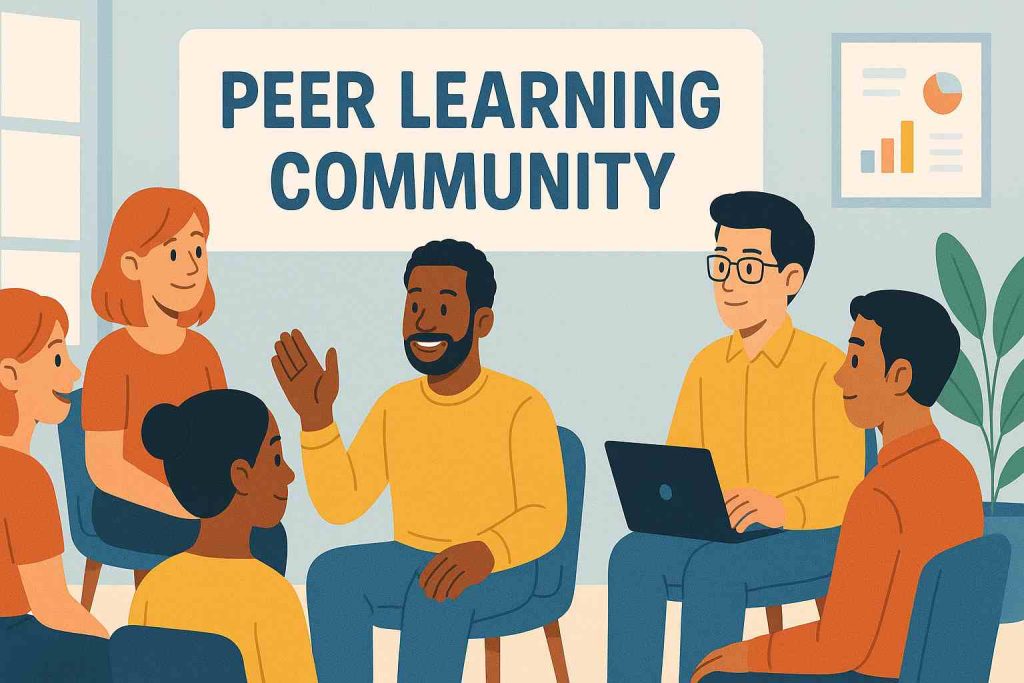
3. Peer Learning Communities
Traditional sales training positions the trainer as the source of all knowledge. Peer learning communities recognize that some of the most valuable insights come from fellow salespeople who are in the trenches every day.
This approach creates structured opportunities for salespeople to learn from each other’s experiences, strategies, and challenges. It transforms sales training from an occasional event into an ongoing process embedded in daily work.
Here’s how to build effective peer learning communities:
Create structured sharing formats. Weekly “win sessions” where reps share successful approaches, monthly case study discussions of challenging sales situations, or “ride-along” programs where reps observe each other’s calls all provide valuable learning opportunities.
Implement a sales mentorship program. Pair experienced reps with newer team members in formal mentoring relationships with clear expectations and discussion guides.
Develop a knowledge base. Create a searchable repository where salespeople can document successful approaches to specific situations, customer stories, and competitive insights.
Recognize and reward knowledge sharing. Include contribution to team learning in performance reviews and compensation structures.
Train in curation skills. Help sales managers identify truly valuable approaches worth sharing versus individual techniques that may not transfer well to others.
One telecommunications company implemented “Solution Circles” where salespeople would present challenging customer situations to peers for collaborative problem-solving. These weekly 30-minute sessions became their most popular sales training activity, with 91% of reps reporting they regularly applied insights from these discussions in their sales conversations.
Peer learning communities are particularly effective because they tap into salespeople’s natural competitive spirit and desire for peer recognition. They also ensure that training content remains highly relevant to current market conditions and customer needs.
4. Technology-Enhanced Role Play
Role-playing has been a sales training staple for decades, but traditional approaches often feel artificial and fail to create realistic pressure. Technology-enhanced role play leverages modern tools to create more authentic practice environments.
This approach uses video recording, AI-powered conversation simulators, and virtual reality to make practice sessions more effective and less awkward. It also enables more frequent practice without requiring dedicated training time.
Here’s how to implement technology-enhanced role play:
Use video recording platforms. Have salespeople record themselves delivering pitches or handling specific objections. These recordings can be reviewed by managers, peers, or the salespeople themselves to identify improvement opportunities.
Implement AI conversation partners. Several platforms now offer AI-powered “customers” that can engage in realistic conversations, present objections, and provide feedback on the salesperson’s approach.
Create a video library. Record your top performers handling common sales situations effectively. Make these videos searchable by topic so other team members can learn from best practices.
Use collaborative annotation tools. Platforms that allow managers or peers to provide timestamp-specific feedback on recorded sales conversations dramatically enhance the learning value.
Set up virtual reality scenarios. For complex selling environments, VR technology can create immersive scenarios that replicate the pressure and uncertainty of real sales situations.
A financial services company implemented a video coaching platform where advisors recorded themselves explaining complex products. Managers provided timestamped feedback, and top-performing videos became learning resources. Within four months, their product explanation quality scores from mystery shoppers improved by 41%.
Technology-enhanced role play works because it combines the safety of practice with elements of real-world pressure. It also makes coaching more efficient by allowing managers to provide targeted feedback without sitting through entire practice sessions.
5. Data-Driven Personalized Sales Training
Most sales training programs take a one-size-fits-all approach. Data-driven personalized training recognizes that different salespeople have different strengths, weaknesses, and learning needs.
This approach uses performance data, assessment results, and behavioral analytics to create customized learning paths for each salesperson. It ensures that everyone focuses on areas that will most improve their specific performance rather than sitting through generic content.
Here’s how to implement data-driven personalized sales training:
Establish clear performance metrics. Define the key indicators that truly drive sales success in your organization. These might include conversion rates at specific stages, deal size, sales cycle length, and customer satisfaction scores.
Conduct skills assessments. Use structured assessments to identify each salesperson’s strengths and development areas across key competencies.
Analyze call recordings. Use conversation intelligence platforms to analyze patterns in successful and unsuccessful sales conversations.
Create personalized learning paths. Based on performance data and assessment results, develop individualized training programs that focus on each person’s highest-impact improvement opportunities.
Implement regular coaching aligned with data. Ensure that manager coaching conversations focus on the specific skills each salesperson is currently working to develop.
A technology services company implemented data-driven personalized training by analyzing each rep’s conversion rates at different pipeline stages. They discovered that some reps excelled at opening conversations but struggled with advancing opportunities, while others showed the opposite pattern. By creating personalized training focused on each rep’s weakest conversion point, they improved overall team conversion rates by 23% in one quarter.
Personalized sales training works because it respects salespeople’s time and focuses development efforts where they’ll create the greatest impact. It also acknowledges the reality that different salespeople may need completely different approaches to reach their full potential.

Building an Integrated Sales Training System
While each of these five approaches can deliver value independently, the most effective sales training programs incorporate elements of all of them into a coherent system.
Start by assessing your current sales training approach. Ask yourself:
- Does our training happen primarily in isolated events, or is it an ongoing process?
- How quickly do salespeople apply what they learn in real customer interactions?
- Do we measure the impact of our sales training on actual performance metrics?
- How personalized is our approach to different salespeople’s needs?
- Do we leverage peer knowledge effectively?
Based on your assessment, begin incorporating elements of the approaches that represent the greatest improvement opportunity for your organization. Focus on one major change at a time rather than overhauling everything at once.
Most importantly, connect your sales training directly to your sales methodology and process. Training should reinforce your established approach to moving opportunities through your sales process, not introduce conflicting concepts or terminology.
The most successful organizations follow these integration principles:
Align training with business objectives. Every sales training initiative should connect directly to specific business outcomes you’re trying to achieve—entering new markets, improving win rates against specific competitors, or increasing average deal size.
Create a learning ecosystem. Build connections between formal training, coaching, knowledge sharing, and performance management systems so they reinforce each other.
Establish clear measurement protocols. Define exactly how you’ll measure the impact of sales training on performance metrics, and track these religiously.
Build manager capabilities. Sales managers play a critical role in reinforcing training through coaching. Invest in developing their ability to observe, give feedback, and guide improvement.
Make learning continuous. Transform sales training from occasional events into an ongoing process embedded in daily work routines.
The Future of Sales Training
Sales training continues to evolve rapidly as new technologies, changing buyer behaviors, and workplace transformations reshape the selling landscape. Forward-thinking organizations are already embracing several emerging trends:
Adaptive learning systems use AI to automatically adjust content and difficulty based on each learner’s performance.
Virtual reality simulations create immersive practice environments for complex selling scenarios.
Behavioral science applications identify the specific triggers and barriers that drive salesperson behavior change.
Customer-led training programs bring actual customers into the training process to provide direct feedback on sales approaches.
As you evolve your sales training approach, maintain focus on the fundamental principles that drive results: relevance to real-world selling situations, opportunities for deliberate practice, personalization to individual needs, and consistent reinforcement.
The single most important factor in sales training success is leadership commitment. When executives clearly communicate that developing sales capability is a strategic priority and back this with resources and attention, the impact can be transformative.
I’ve seen companies double their win rates within a year of implementing thoughtful, integrated sales training systems. I’ve watched struggling salespeople transform into consistent performers after receiving the right development at the right time.
The question isn’t whether you can afford to invest in effective sales training. In today’s hyper-competitive marketplace, the question is whether you can afford not to.
Your sales team’s capabilities directly determine your market position and growth trajectory. Invest in them wisely.